The Allure of Instant Results
Social media thrives on transformation. Dramatic before-and-after photos, glowing testimonials, and influencer endorsements create the impression that skincare concerns can be solved overnight.
What these posts rarely show are the side effects, failed attempts, or the fact that every individual's skin is unique.
A product that works beautifully for one person may trigger breakouts, allergies, pigmentation, or severe irritation in another. Skin is personal, and there is no universal skincare hack that guarantees perfect results for everyone.
When Trends Become Trouble
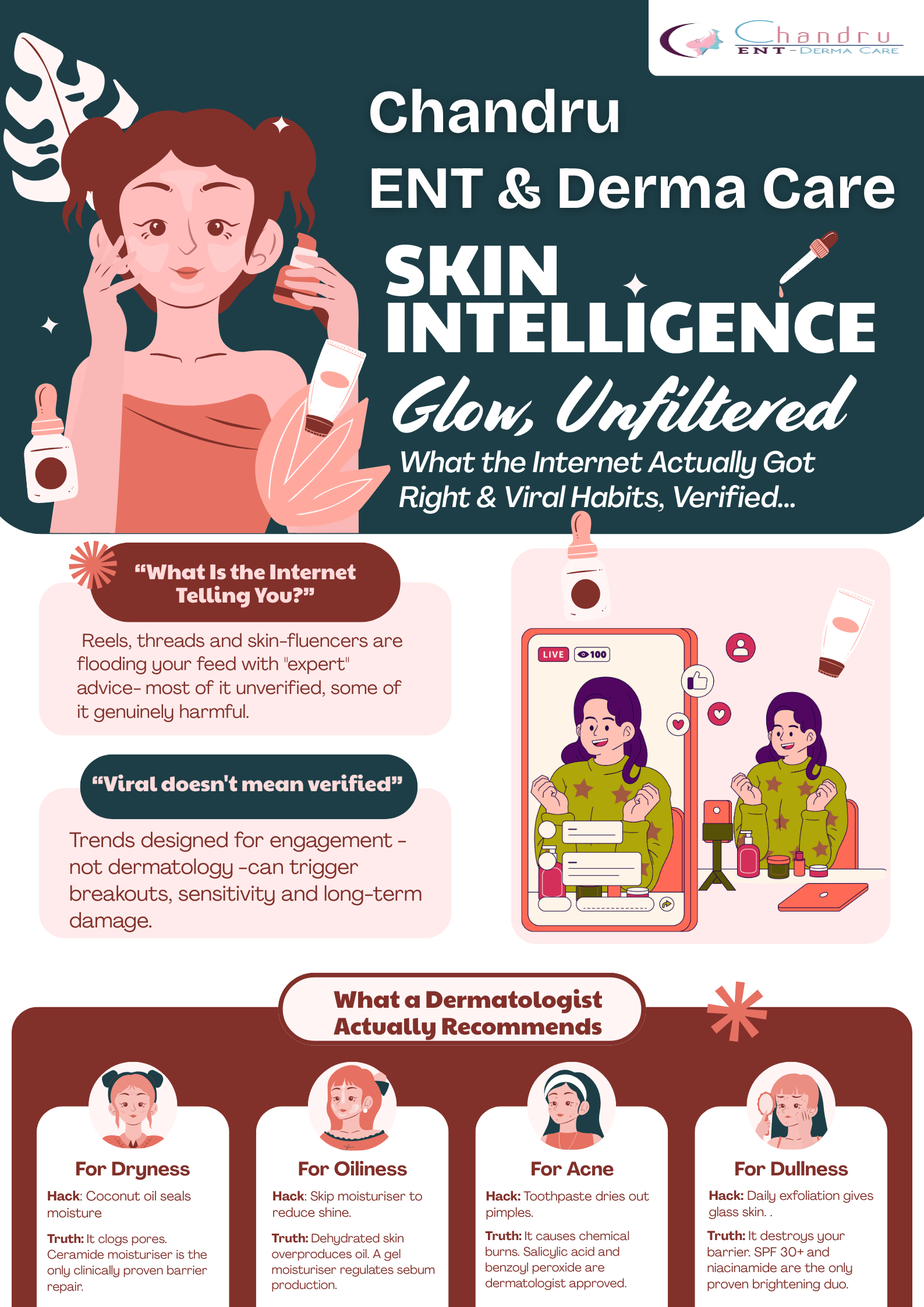
Many viral skincare hacks gain popularity because they are inexpensive, easily accessible, or marketed as "natural." Unfortunately, natural does not always mean safe.
The Lemon Juice Myth
Lemon juice is frequently promoted as a natural solution for pigmentation and skin brightening.
Medical Reality:
Its high acidity can disrupt the skin barrier, cause irritation, and increase sensitivity to sunlight, often leading to more pigmentation rather than less.
Toothpaste for Acne
A long-standing internet favorite suggests applying toothpaste directly to pimples.
Medical Reality:
Toothpaste is formulated for teeth, not facial skin. It may cause dryness, redness, irritation, and in some cases, chemical burns.
Exfoliation Without Limits
Many online routines encourage layering multiple exfoliating acids or scrubbing aggressively for an "instant glow."
Medical Reality:
Over-exfoliation strips the skin of its natural protective barrier, resulting in inflammation, sensitivity, and persistent breakouts.
Skipping Sunscreen Indoors
A surprising amount of online content still downplays the importance of daily sunscreen.
Medical Reality:
Ultraviolet rays penetrate clouds and windows. Consistent sunscreen use remains one of the most effective tools for preventing premature aging, pigmentation, and skin cancer.
The Cost of Following Unverified Advice
Experimenting with unproven skincare hacks may seem harmless, but the consequences can be significant:
- Chronic skin irritation
- Allergic reactions
- Worsening acne
- Hyperpigmentation
- Compromised skin barrier
- Scarring
- Delayed treatment of genuine skin conditions
Many patients spend months repairing damage caused by a trend that lasted only a few days online.
How to Be a Smarter Skincare Consumer
Before trusting a viral skincare recommendation, ask yourself:
✔ Is the information provided by a qualified dermatologist or healthcare professional?
✔ Is there scientific evidence supporting the claim?
✔ Are the risks and side effects discussed openly?
✔ Does the advice sound realistic rather than miraculous?
✔ Would you trust this advice if it weren't presented in a viral video?
If the answer is no, it deserves a second thought.
The Timeless Formula for Healthy Skin
Despite the endless stream of beauty trends, the foundations of good skincare have remained unchanged:
Cleanse gently.
Avoid harsh products that strip the skin.
Moisturize consistently.
A healthy skin barrier is essential for overall skin health.
Wear sunscreen every day.
No skincare product can outperform sun protection.
Be patient.
Healthy skin is a result of consistency, not shortcuts.
Seek professional guidance.
When dealing with acne, pigmentation, eczema, or other concerns, personalized medical advice is far more valuable than internet trends.
A Final Word
Social media can inspire, educate, and connect us. However, when it comes to skincare, popularity should never be mistaken for credibility.
Your skin is not a social media experiment. It is a living organ that deserves care rooted in science, not speculation.
The next time a viral skincare hack appears on your screen, pause and ask: Is this evidence-based skincare—or simply entertainment disguised as advice?
 ENT Treatment Skin Care Hair Treatment Cosmetology Laser Treatments Facial Surgery
Leave a Comment