


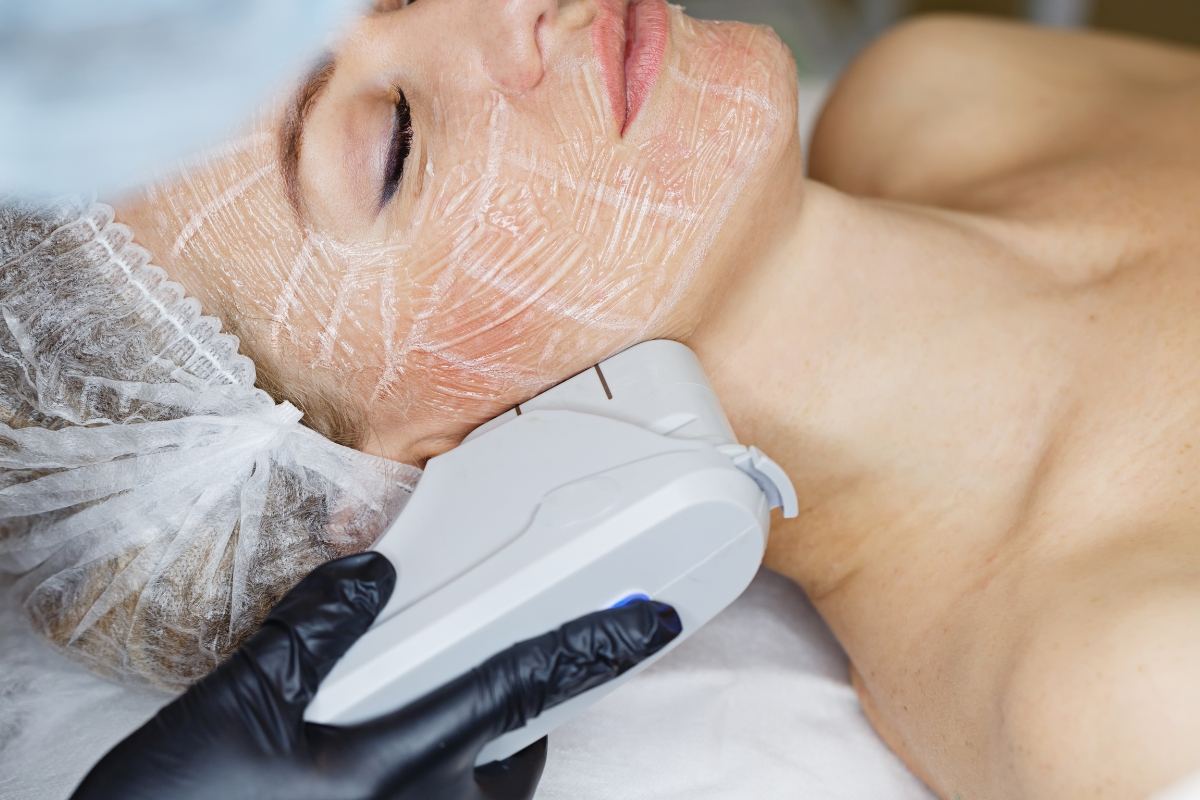
High-Intensity Focused Ultrasound (HIFU) is a non-invasive, US FDA-cleared procedure for lifting and tightening lax skin. Unlike superficial energy-based treatments, HIFU delivers focused ultrasound energy to precise tissue depths — including the superficial muscular aponeurotic system (SMAS), the same layer targeted during surgical facelifts — stimulating new collagen synthesis (neocollagenesis) and gradual tissue tightening over three to six months.
HIFU achieves a visible lifting and contouring effect on the brows, midface, jowls and neck without incisions, injections or downtime. Results develop progressively and typically last 12–18 months. At Chandru ENT-Derma Care, HIFU is performed by Dr. Nethravathi A.R following a thorough patient assessment to confirm suitability and define the treatment zones.
- Consistent daily use of broad-spectrum SPF 50 is the most evidence-supported intervention to slow photoageing and collagen degradation.
- Topical retinoids (retinol or prescription tretinoin) stimulate dermal collagen production and are well established for maintaining skin density.
- Avoid smoking — it accelerates collagen crosslinking, reduces dermal vascularity and causes premature skin ageing.
- Maintain a stable, healthy body weight to avoid repeated cycles of skin stretching and deflation.
- Eat a diet rich in antioxidants and collagen precursors (vitamin C, amino acids, zinc) to support endogenous collagen synthesis.
Causes of Skin Laxity
Skin laxity is a multifactorial process driven by both intrinsic ageing and extrinsic environmental factors.

Age-Related Collagen Decline
Collagen production decreases at approximately 1% per year after age 25. Loss of the SMAS support structure leads to jowling, midface descent and deepened nasolabial folds over time.

Photoageing
Chronic ultraviolet radiation breaks down collagen and elastin fibres in the dermis, accelerating skin laxity and rhytid (wrinkle) formation.

Gravitational Changes
Progressive downward migration of facial tissues is a normal consequence of ageing and gravity, contributing to brow ptosis, cheek descent and neck laxity.

Post-Weight Loss Laxity
Significant weight reduction can leave loose, deflated facial and neck skin where volume previously provided structural support.
- Genetic PredispositionSome individuals experience premature skin laxity due to reduced intrinsic collagen synthesis capacity.
About the Treatment
HIFU is delivered via a handheld transducer that emits focused ultrasound at three standard tissue depths: 1.5 mm (dermis), 3.0 mm (deep dermis/SMAS) and 4.5 mm (SMAS). Thermal coagulation points (TCPs) at each depth trigger a healing response, with organised new collagen depositing gradually over the following months.
The clinical result — progressive tightening and lifting — becomes visible from four to six weeks, with peak results at three to six months. A single treatment session typically provides results lasting 12–18 months. Repeat sessions can be performed on an annual basis to maintain the collagen-stimulating effect.
How the Procedure Is Performed
1. Consultation & Laxity Assessment
The dermatologist evaluates the degree of laxity, identifies treatment zones and discusses realistic expected outcomes and limitations. Pre-procedure photographs are taken.
2. Pre-Procedure Preparation
The skin is cleansed. A topical analgesic cream may be applied 30–45 minutes beforehand for patients with lower pain tolerance.
3. Ultrasound Gel Application
Coupling gel is applied to ensure optimal energy transmission between the transducer and the skin surface.
4. Tissue Depth Mapping
The HIFU device's imaging mode is used to visualise subcutaneous tissue planes, confirming correct transducer depth settings for each treatment zone.
- Step 5: Treatment DeliveryThe HIFU handpiece is systematically moved across the pre-mapped zones in a standardised grid pattern. Each pass delivers focused ultrasound energy at the target tissue depth. A brief, deep heating sensation or occasional sharp sensation during energy delivery is normal and expected.
- Step 6: Post-Treatment & DischargeMild redness and warmth are normal and resolve within a few hours. You may resume normal daily activities immediately after the procedure. Written aftercare instructions and a follow-up appointment are provided.
Possible Side Effects
HIFU has an excellent safety profile. Side effects are generally mild and self-resolving.
Redness & Flushing
Mild, during and immediately after treatment; resolves within a few hours.
Tingling & Warmth
Normal sensations during and after energy delivery; resolve within hours.
Mild Localised Swelling
Resolves within 24–48 hours.
Tenderness to Touch
Over bony prominences or treated SMAS areas; typically resolves within a few days to one week.
- Temporary Superficial BruisingResolves within 7–10 days.
- Transient Nerve Sensation ChangesTemporary numbness or altered sensation, particularly over bony areas; self-resolving within weeks.
Aftercare
No downtime is required. The following simple steps support optimal collagen regeneration after HIFU.
- Resume normal daily activities immediately — no recovery period is required.
- Apply gentle moisturiser and SPF 50 the morning following the procedure.
- Paracetamol (500–1000 mg) may be taken as needed for any post-procedure discomfort.
- Avoid intense heat (saunas, steam rooms) and strenuous exercise for 24 hours.
- Consider collagen-supportive skincare (topical retinoids, vitamin C serums) to complement the treatment's long-term regenerative effects.
- Attend your scheduled follow-up appointment three to six months after treatment to assess the clinical result.
Who Can Receive This Treatment?
HIFU is best suited to patients with early to moderate skin laxity who wish to avoid surgery.
 ENT Treatment Skin Care Hair Treatment Cosmetology Laser Treatments Facial Surgery