

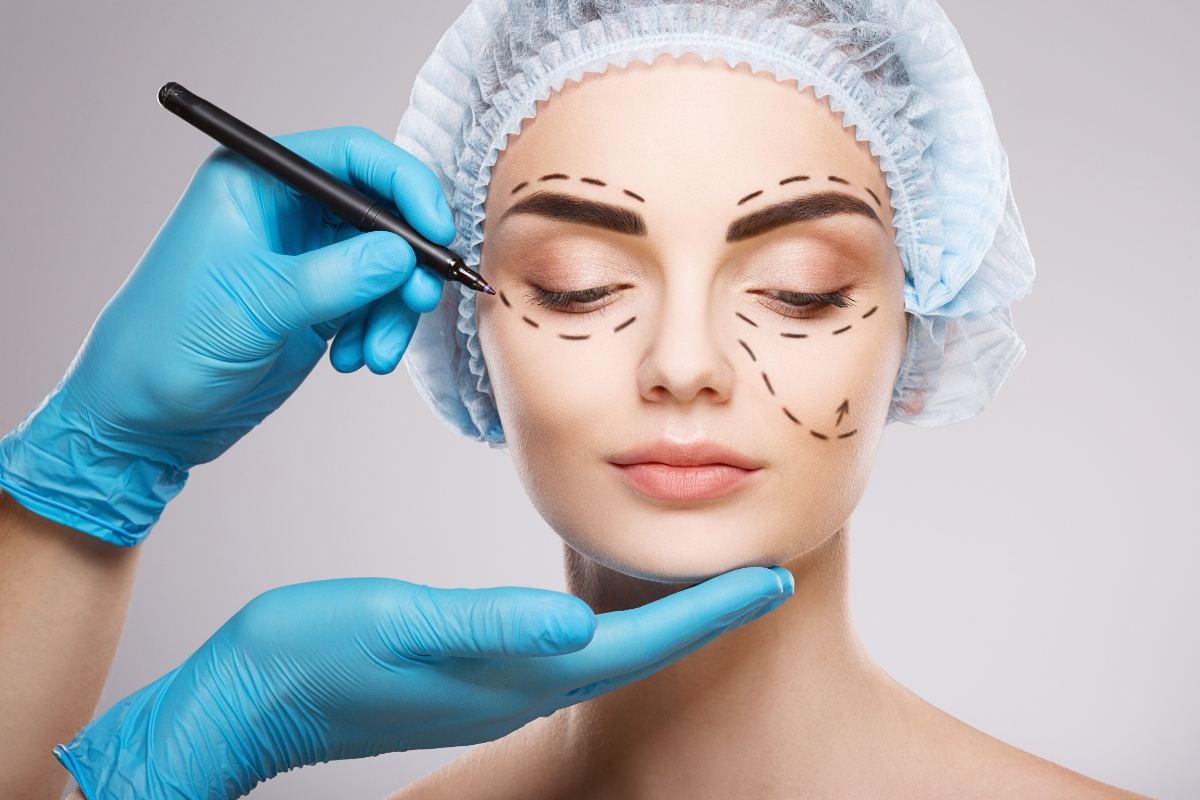
The Facial Plastic Surgery division at Chandru ENT-Derma Care is led by Dr. Chethan Kumar U.P, who holds a Fellowship in Rhinoplasty from South Korea and brings over 22 years of surgical expertise. Facial plastic surgery encompasses procedures that alter or restore facial form and function, addressing both aesthetic and functional concerns.
Procedures are performed under local anaesthesia with sedation or general anaesthesia (as appropriate) in the clinic's day-care surgical unit. The four primary procedures offered are: Rhinoplasty (Nose Reshaping), Lip Reduction, Dimple Creation and Scar Revision. Every procedure begins with a detailed consultation that includes photographic documentation and a frank, transparent discussion of expected outcomes and limitations.
- Wear protective facial gear during contact sports and activities with a risk of nasal injury.
- Manage acne effectively and early to prevent deep facial scarring that may later require revision.
- Ensure proper wound management of all facial lacerations — optimal primary closure minimises scar formation.
- Consult a qualified facial plastic surgeon before undergoing rhinoplasty elsewhere, to avoid the increased complexity of revision rhinoplasty.
Indications for Facial Plastic Surgery
Patients seek facial plastic surgery for a range of functional and aesthetic reasons.

Rhinoplasty — Congenital & Developmental
Bulbous nasal tip, prominent dorsal hump, flared nostrils, wide nasal bridge or asymmetric nasal anatomy present from birth or adolescence are common aesthetic indications.

Rhinoplasty — Functional (Breathing)
A deviated nasal septum (DNS) causing unilateral or bilateral nasal obstruction — either in isolation or in conjunction with aesthetic rhinoplasty — is a recognised functional surgical indication.

Rhinoplasty — Post-Traumatic
Nasal bone or cartilage deformity resulting from a previous nasal fracture is one of the most common indications for secondary rhinoplasty.

Lip Reduction
Macrocheilia (excess lip tissue causing the lips to appear disproportionately large) may be of congenital origin or associated with certain systemic conditions.
- Dimple CreationCheek dimples are an aesthetically sought facial feature; dimpleplasty is a minor elective procedure performed under local anaesthesia on an outpatient basis.
- Scar RevisionProminent, distorted, hypertrophic or functionally limiting facial scars resulting from acne, trauma, surgery or burns may be addressed surgically or with a combination of laser and surgical techniques.
About the Procedures
Rhinoplasty: Surgical reshaping of nasal cartilage and bone to improve aesthetic proportions and/or nasal airflow. Techniques include open rhinoplasty (with a small inter-columellar incision) and closed rhinoplasty (all incisions within the nostrils). Common modifications include dorsal hump reduction, tip refinement, nostril reduction (alarplasty) and septal correction.
Lip Reduction: Under local anaesthesia, an elliptical wedge of mucosa and submucosal tissue is excised from the inner vermilion; the edges are closed with fine dissolvable sutures.
Dimple Creation (Dimpleplasty): A minor outpatient procedure under local anaesthesia in which a small amount of buccal fat is anchored to the dermis via an internal absorbable suture, creating a natural-appearing dimple when smiling.
Scar Revision: Surgical techniques — Z-plasty, W-plasty, geometric broken line closure (GBLC) — are combined with laser therapy to improve the appearance of prominent facial scars.
How the Procedures Are Performed
1. Consultation & Photographic Analysis
A detailed pre-operative consultation includes standardised facial photography, 3D imaging simulation (for rhinoplasty, where available) and a full discussion of surgical technique, risks, benefits, recovery timeline and realistic expectations.
2. Pre-Operative Investigations
Blood tests (CBC, coagulation profile, blood group), ECG (for patients over 40 or with cardiac history) and nasal endoscopy (for rhinoplasty) are completed. The patient is cleared for surgery.
3. Anaesthesia
Rhinoplasty and scar revision are performed under local anaesthesia with sedation or general anaesthesia. Lip reduction and dimpleplasty are performed under local anaesthesia only.
4. Surgical Procedure
For rhinoplasty, structural modifications (hump reduction, tip refinement, septal correction) are performed under direct vision via the open or closed approach. Wounds are closed meticulously, and a nasal splint is applied.
- Step 5: Recovery in the ClinicPatients are monitored in the recovery area until stable. Day-care procedures allow discharge on the same day. Written post-operative instructions are provided.
- Step 6: Follow-UpNasal splint removal at 7–10 days for rhinoplasty. Suture removal at 5–7 days for non-absorbable sutures. Final aesthetic result is assessed at 6–12 months after rhinoplasty, as residual swelling resolves progressively.
Possible Side Effects & Risks
All surgical procedures carry inherent risks, which are minimised by careful patient selection, surgical expertise and adherence to post-operative care.
Rhinoplasty — Oedema & Bruising
Significant post-operative swelling and periorbital bruising are expected; substantially improve within 2–3 weeks.
Rhinoplasty — Nasal Congestion
Temporary nasal blockage due to internal swelling; resolves as oedema subsides over several weeks.
Rhinoplasty — Prolonged Swelling
Subtle tip swelling may take 6–12 months to fully resolve; patience is essential when assessing the final result.
Lip Reduction — Swelling
Significant lip swelling in the first 7–10 days; settles to the final result within four weeks.
- InfectionManaged with appropriate antibiotics; risk minimised by aseptic surgical technique and post-operative wound care.
- Revision SurgeryMinor refinements are occasionally needed at 12 months post-rhinoplasty once all swelling has fully resolved.
Post-Operative Care
Adhering to the post-operative protocol is essential for optimal healing and surgical outcome.
- Keep the nasal splint clean, dry and in place for 7–10 days after rhinoplasty; do not attempt to remove it early.
- Avoid nose-blowing, strenuous exercise, bending over and contact sports for three to four weeks post-rhinoplasty.
- Sleep with the head elevated on two pillows for the first two weeks.
- Apply prescribed topical ointment or saline spray to healing surgical sites as instructed.
- Avoid direct sun exposure on healing scars and surgical sites; apply SPF 50.
- Attend all scheduled wound review and suture removal appointments without exception.
Who Can Receive Facial Plastic Surgery?
All candidates are assessed individually during a detailed pre-operative consultation.
 ENT Treatment Skin Care Hair Treatment Cosmetology Laser Treatments Facial Surgery