


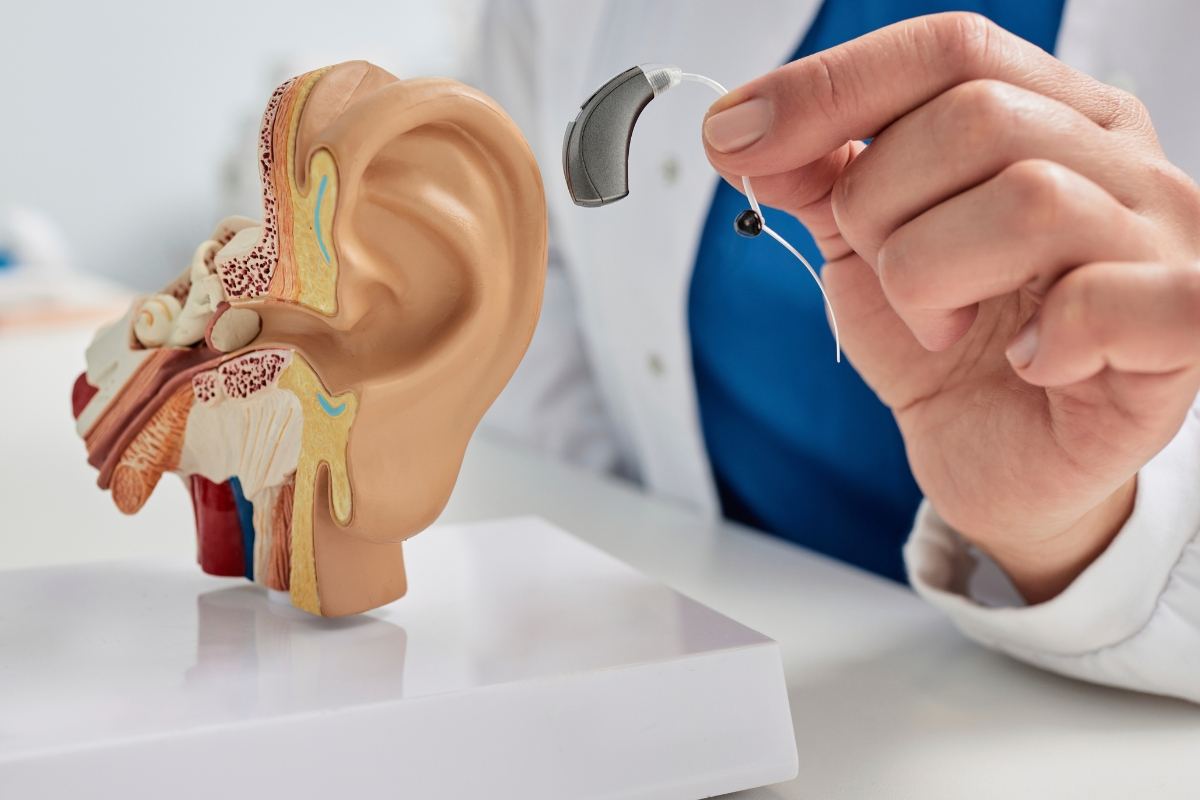
Audiometry is the clinical science of assessing hearing acuity and diagnosing hearing disorders across the full spectrum — from mild high-frequency loss to profound bilateral deafness. The World Health Organisation (WHO) estimates that approximately 63 million Indians live with significant auditory impairment, making hearing assessment one of the most critical and yet under-utilised health services in the country.
At Chandru ENT-Derma Care, comprehensive audiometric assessment is performed by Dr. Chethan Kumar U.P (MS ENT) in a dedicated, calibrated testing environment. The service includes Pure Tone Audiometry (PTA), Impedance Audiometry (tympanometry), Speech Audiometry and — following diagnosis — expert hearing aid consultation, trial and fitting for eligible patients using digitally programmable, multi-channel hearing aid technology.
- Use hearing protection (earplugs or earmuffs rated for the specific noise level) in occupational and recreational settings with sustained sound levels above 85 dB.
- Observe the WHO's 60/60 rule: use personal audio devices at no more than 60% of maximum volume for no longer than 60 minutes at a stretch.
- Treat ear infections promptly and completely; do not self-medicate or allow chronic middle ear disease to persist untreated.
- Seek immediate ENT review for sudden hearing loss or new tinnitus — treatment of SSHL within 24–72 hours significantly improves prognosis.
- Avoid excessive ear cleaning; never insert cotton buds or any object beyond the outer ear canal.
- Before commencing aminoglycoside antibiotics, chemotherapy or high-dose diuretics, discuss ototoxicity risk with your treating doctor. Baseline and monitoring audiometry may be warranted.
Causes of Hearing Loss
Hearing loss may be conductive (outer or middle ear), sensorineural (inner ear or auditory nerve) or mixed. Its causes span all age groups.

Age-Related Hearing Loss (Presbycusis)
The most common cause of hearing impairment globally — a gradual, bilateral, symmetrical sensorineural loss of high-frequency hearing associated with cochlear ageing. Affects approximately 25–40% of individuals over 65 years.

Noise-Induced Hearing Loss (NIHL)
Permanent cochlear damage caused by prolonged or sudden high-intensity sound exposure (above 85 dB). Occupational NIHL is a significant public health concern in India's industrial sector; recreational NIHL from personal audio devices is rising among young adults.

Chronic Otitis Media (Middle Ear Infection)
Chronic or recurrent middle ear disease — particularly prevalent in Indian children — causes conductive hearing loss via tympanic membrane perforation, ossicular erosion or cholesteatoma formation.

Sudden Sensorineural Hearing Loss (SSHL)
A medical emergency defined as hearing loss of 30 dB or more over at least three consecutive frequencies, occurring within 72 hours. Requires urgent ENT assessment and treatment; early systemic corticosteroid therapy significantly improves outcomes.
- Congenital Hearing LossPresent from birth due to genetic mutations, prenatal infection (rubella, CMV — TORCH organisms), birth asphyxia or ototoxic drug exposure during pregnancy. Early identification through neonatal screening prevents speech and language delay.
- OtotoxicityCochlear damage caused by certain medications: aminoglycoside antibiotics (gentamicin, amikacin), loop diuretics (furosemide), antimalarials (quinine), platinum-based chemotherapy (cisplatin) and high-dose salicylates. Risk is dose-dependent and cumulative.
- Ménière's DiseaseEndolymphatic hydrops characterised by episodic vertigo, fluctuating low-frequency hearing loss, tinnitus and aural fullness. Management is medical and requires specialist monitoring.
About the Assessment & Hearing Aid Service
The audiometric assessment characterises the type (conductive, sensorineural or mixed), degree (mild, moderate, severe or profound) and configuration of hearing loss, providing the clinical basis for management decisions.
Hearing Aid Fitting: For patients with confirmed sensorineural hearing loss not amenable to surgical correction, digitally programmable, multi-channel hearing aids are prescribed and fitted. Modern hearing aids are available in Behind-the-Ear (BTE), Receiver-in-Canal (RIC), In-the-Ear (ITE) and Completely-in-Canal (CIC) styles. Each device is programmed specifically to the patient's audiogram and listening environment, with follow-up adjustments scheduled over the first three months of use.
How the Audiometric Assessment Is Performed
1. Clinical History & Otoscopy
A detailed history of hearing difficulty, tinnitus, vertigo and ear symptoms is taken. Dr. Chethan Kumar inspects both ear canals and tympanic membranes using an otoscope to identify visible pathology (wax, perforation, infection).
2. Tympanometry
A soft probe tip is placed at the entrance of the ear canal, and automated measurement of middle ear pressure and tympanic membrane compliance takes approximately two minutes per ear. This identifies middle ear effusion, Eustachian tube dysfunction or tympanic membrane perforations.
3. Pure Tone Audiometry (PTA)
Performed in a sound-proof, acoustically treated booth. Calibrated headphones deliver tones at standard frequencies (250 Hz to 8000 Hz) at varying intensities. The patient signals — by pressing a button — each time a tone is heard, enabling a precise audiogram to be plotted.
4. Bone Conduction Testing
A vibrator placed behind the ear delivers tones that bypass the outer and middle ear and stimulate the cochlea directly, distinguishing conductive from sensorineural loss.
- Step 5: Speech AudiometryThe patient's ability to repeat spoken words at different volumes is assessed, providing information about how well speech is understood — which is critical for hearing aid programming.
- Step 6: Audiogram Interpretation & Management PlanDr. Chethan Kumar reviews the complete audiogram and discusses findings, diagnosis and management options — whether medical, surgical or hearing aid provision — in detail with the patient.
Safety Information
Audiometric testing is entirely non-invasive and safe for all age groups.
Audiometric Testing
No side effects whatsoever. The test involves only listening to soft tones through headphones.
Hearing Aid — Feedback
A whistling sound (acoustic feedback) is common in new users, particularly during the fitting and acclimatisation period; resolved by device reprogramming at follow-up.
Hearing Aid — Occlusion
A sensation of blocked or 'full' ears — particularly with closed-fit hearing aid domes. Managed by switching to an open-dome fitting or a ventilated ear mould.
Hearing Aid Care & Follow-Up
New hearing aid users require a structured acclimatisation programme for best outcomes.
- Attend all scheduled follow-up appointments for device reprogramming and fine-tuning over the first three months.
- Build up wearing time gradually — start with a few hours per day and increase progressively as your auditory system adapts.
- Clean the hearing aid daily with a dry cloth; use the cleaning tools provided. Keep devices away from moisture, heat and small children.
- Replace batteries regularly; battery life varies by device type and usage (typically 5–14 days for zinc-air batteries).
- Return for repeat audiometry annually or sooner if there is any perceived deterioration in hearing.
Who Should Have a Hearing Assessment?
Audiometric assessment is recommended for any individual with hearing-related concerns and has no contraindications.
 ENT Treatment Skin Care Hair Treatment Cosmetology Laser Treatments Facial Surgery