

Why Does Your Nose Bleed So Easily?
The inside of your nose is lined with tiny blood vessels that lie very close to the surface. Because these vessels are delicate, even minor irritation can cause them to rupture.
A nosebleed isn't always a disease—it's often a symptom of an underlying problem.
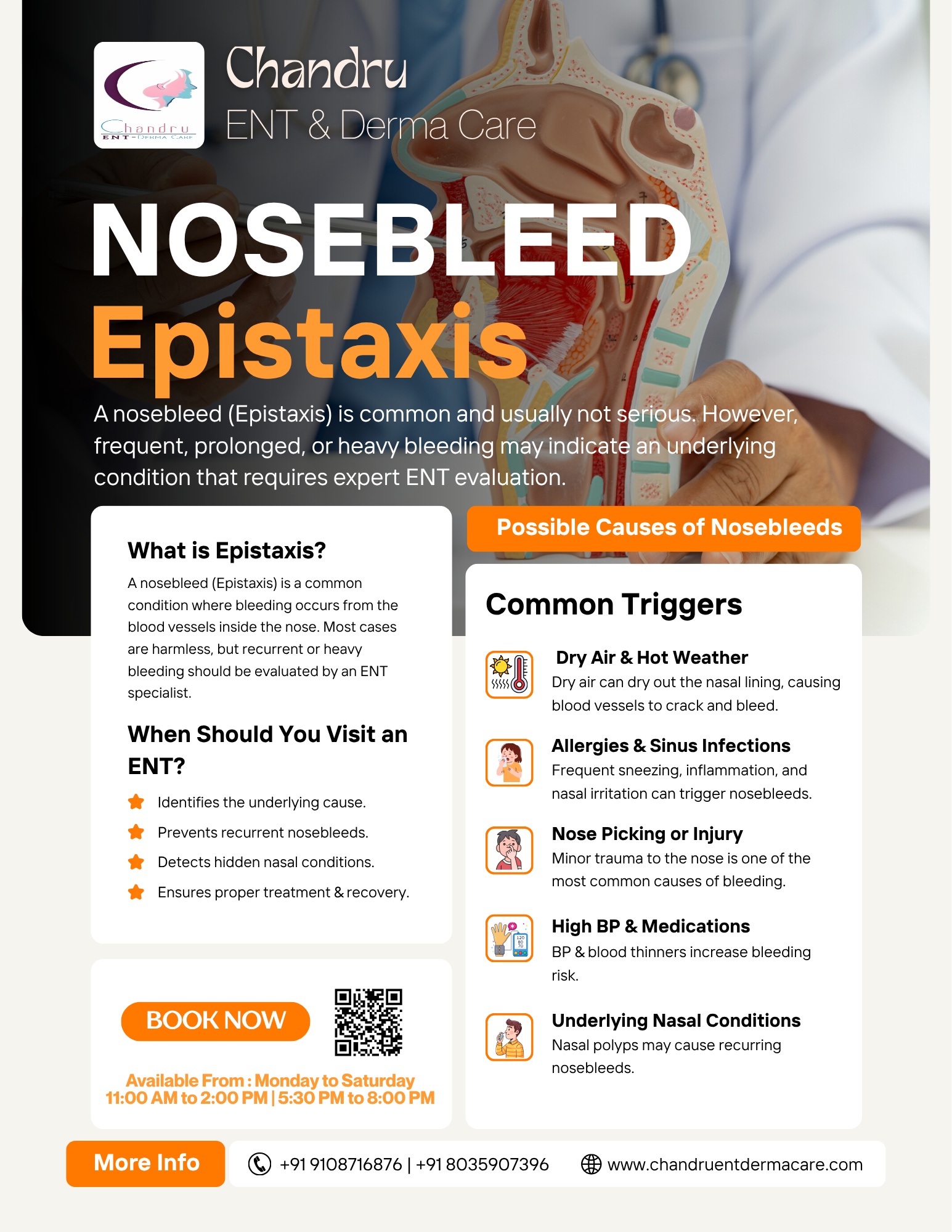
The 5 Most Common Reasons Behind Nosebleeds
🌡️ Dry Air Can Dry Out Your Nose
When the nasal lining loses moisture, it cracks easily. This is why nosebleeds are more common during hot summers, winters, or in air-conditioned rooms.
🤧 Allergies Don't Just Cause Sneezing
Persistent allergies and sinus infections inflame the nasal lining. Frequent rubbing, sneezing, and blowing your nose repeatedly increase the chances of bleeding.
🤕 Small Injuries, Big Bleeding
A simple habits like nose picking or even blowing your nose forcefully can damage tiny blood vessels and trigger a nosebleed.
💊 Certain Medicines Can Make Bleeding Worse
Blood-thinning medications and uncontrolled high blood pressure can make nosebleeds heavier or harder to stop.
🩺 Sometimes, It's More Than Just Dryness
Repeated nosebleeds may be linked to conditions such as a deviated nasal septum, nasal polyps, or other structural problems that require an ENT examination.
What Should You Do When a Nosebleed Starts?
Most people make one common mistake—they tilt their head backward.
This doesn't stop the bleeding. Instead, it causes blood to flow into the throat, which can lead to coughing, choking, or vomiting.
Instead, remember these four simple steps:
✔ Sit upright.
✔ Lean slightly forward.
✔ Pinch the soft part of your nose for 10–15 minutes.
✔ Stay calm and avoid checking repeatedly if the bleeding has stopped.
When Is a Nosebleed No Longer 'Normal'?
Occasional nosebleeds are common.
But you should consult an ENT specialist if:
- The bleeding lasts longer than 20 minutes.
- Nosebleeds happen repeatedly.
- The bleeding is heavy or difficult to control.
- It occurs after a facial injury.
- You feel dizzy, weak, or short of breath.
- You're taking blood-thinning medication.
These signs deserve proper evaluation—not guesswork.
Can Nosebleeds Be Prevented? Absolutely.
Simple lifestyle changes can make a big difference.
✔ Keep your nose moisturized during dry weather.
✔ Drink enough water every day.
✔ Avoid picking or rubbing your nose.
✔ Treat allergies early.
✔ Keep your blood pressure under control.
✔ Don't ignore repeated nosebleeds.
Prevention is always easier than treatment.
How Can an ENT Specialist Help?
If nosebleeds keep coming back, treating only the bleeding isn't enough.
An ENT specialist identifies why it's happening.
Depending on the cause, treatment may include medications, nasal endoscopy, cauterization of bleeding vessels, allergy management, or correction of structural problems like a deviated septum.
The goal isn't just to stop today's nosebleed—it's to prevent tomorrows.
Don't Ignore What Your Nose Is Trying to Tell You
A single nosebleed is rarely a cause for concern.
But if it becomes frequent, lasts longer than usual, or keeps returning, it's time to look beyond the symptom.
Early diagnosis not only provides relief but also helps detect conditions before they become more serious.
If you or a loved one experiences recurring nosebleeds, consult the ENT specialists at Chandru ENT & Derma Care for a comprehensive evaluation and personalized treatment plan.
 ENT Treatment Skin Care Hair Treatment Cosmetology Laser Treatments Facial Surgery
Leave a Comment