
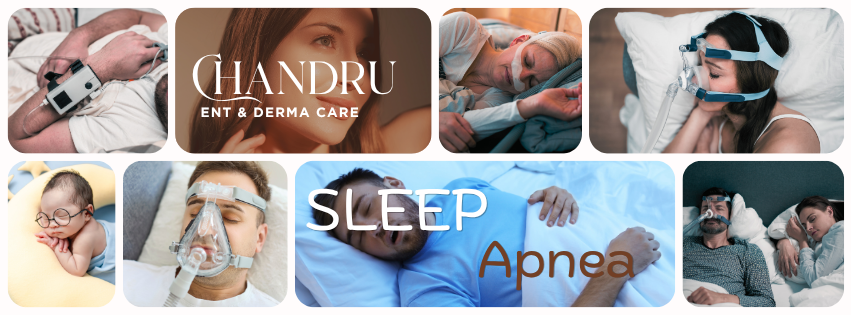
🌙 What Is Sleep Apnea?
Do you snore loudly, wake up feeling tired or experience daytime sleepiness even after a full night's sleep? These may be signs of sleep apnea, a sleep disorder in which breathing repeatedly stops and starts during sleep.
The most common type is obstructive sleep apnea (OSA), which occurs when the upper airway becomes partially or completely blocked during sleep. Early diagnosis and appropriate treatment can improve sleep quality, daytime alertness and overall health.
🔍 What Causes Sleep Apnea?
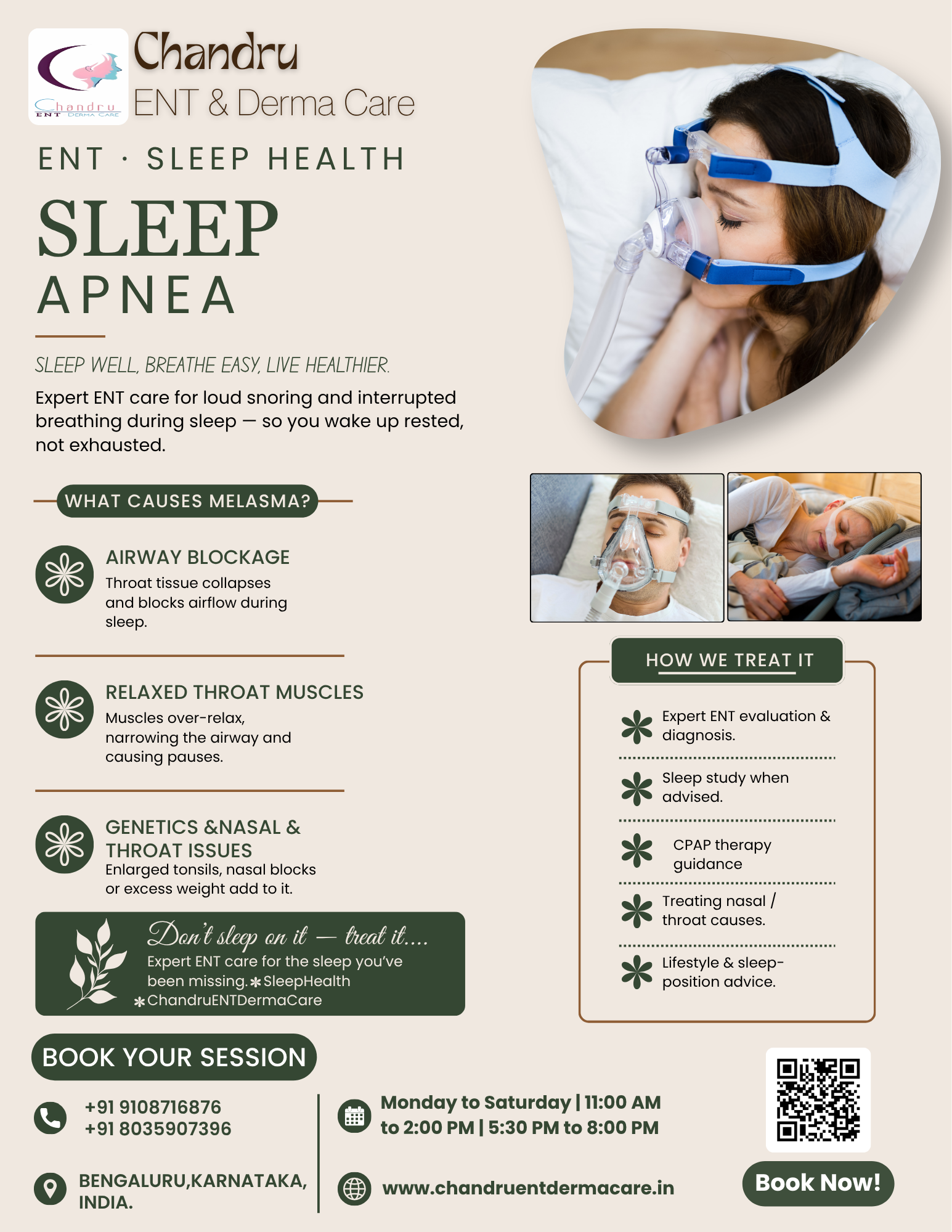
🔹 Airway Blockage: Relaxation of throat muscles during sleep can narrow or block the airway.
🔹 Relaxed Throat Muscles: Reduced muscle tone during sleep can contribute to breathing interruptions.
🔹 Excess Weight: Being overweight can increase the risk of obstructive sleep apnea.
🔹 Nasal or Throat Problems: Nasal congestion, enlarged tonsils and certain anatomical features may contribute to airway obstruction.
⚠️ Common Symptoms of Sleep Apnea
😴 Loud, frequent snoring.
🌬️ Pauses in breathing noticed by a sleeping partner.
😮💨 Gasping or choking during sleep.
☀️ Excessive daytime sleepiness or fatigue.
🧠 Difficulty concentrating, morning headaches or unrefreshing sleep.
🩺 How Is Sleep Apnea Treated?
1. ENT Evaluation
A specialist can assess your symptoms, airway and medical history to determine whether further testing is needed.
2. Sleep Study
A sleep study helps diagnose sleep apnea and assess its severity. Depending on your circumstances, an overnight laboratory study or a suitable home sleep apnea test may be recommended.
3. CPAP Therapy
Continuous positive airway pressure (CPAP) delivers pressurised air through a mask to help keep the airway open during sleep. It is a common and effective treatment for obstructive sleep apnea.
4. Lifestyle Changes
Weight management, regular physical activity, limiting alcohol and maintaining a consistent sleep schedule may help manage the condition. Sleeping on your side can benefit some people.
💚 Tips for Better Sleep
✅ Maintain a regular sleep schedule.
✅ Avoid alcohol close to bedtime.
✅ Discuss persistent nasal congestion with a healthcare professional.
✅ Use prescribed CPAP equipment consistently if recommended.
✅ Do not ignore loud snoring accompanied by daytime tiredness or witnessed breathing pauses.
🌟 Get Expert Guidance at Chandru ENT & Derma Care
Good sleep is essential for your health and well-being. At Chandru ENT & Derma Care, Bengaluru, patients can seek professional guidance for snoring, sleep-related breathing difficulties and suspected sleep apnea.
📍 Location: Bengaluru, Karnataka, India
📞 Book your ENT consultation to discuss your symptoms and explore suitable diagnostic and treatment options.
❓ Frequently Asked Questions
Q1. Is snoring always a sign of sleep apnea?
No. However, loud snoring accompanied by gasping, breathing pauses or daytime sleepiness should be evaluated.
Q2. Is sleep apnea treatable?
Yes. Treatments such as CPAP, suitable oral appliances and selected lifestyle changes can help manage the condition.
Q3. Can sleep apnea affect overall health?
Untreated sleep apnea is associated with increased risks of high blood pressure, cardiovascular problems and impaired daytime alertness.
Q4. When should I consult a doctor?
Seek medical advice if you experience repeated breathing pauses during sleep, gasping, loud snoring or persistent daytime sleepiness.
✨ Conclusion
Sleep apnea is more than just snoring. It can affect sleep quality, daily functioning and long-term health. Recognising the symptoms and seeking timely medical assessment are important steps towards better sleep.
Chandru ENT & Derma Care — Breathe Better, Sleep Better, Live Healthier!
Disclaimer: This article is for educational purposes only and does not replace professional medical advice, diagnosis or treatment.
 ENT Treatment Skin Care Hair Treatment Cosmetology Laser Treatments Facial Surgery
Leave a Comment